Beef and Broccoli: Classic Takeout-Style Dish Explained
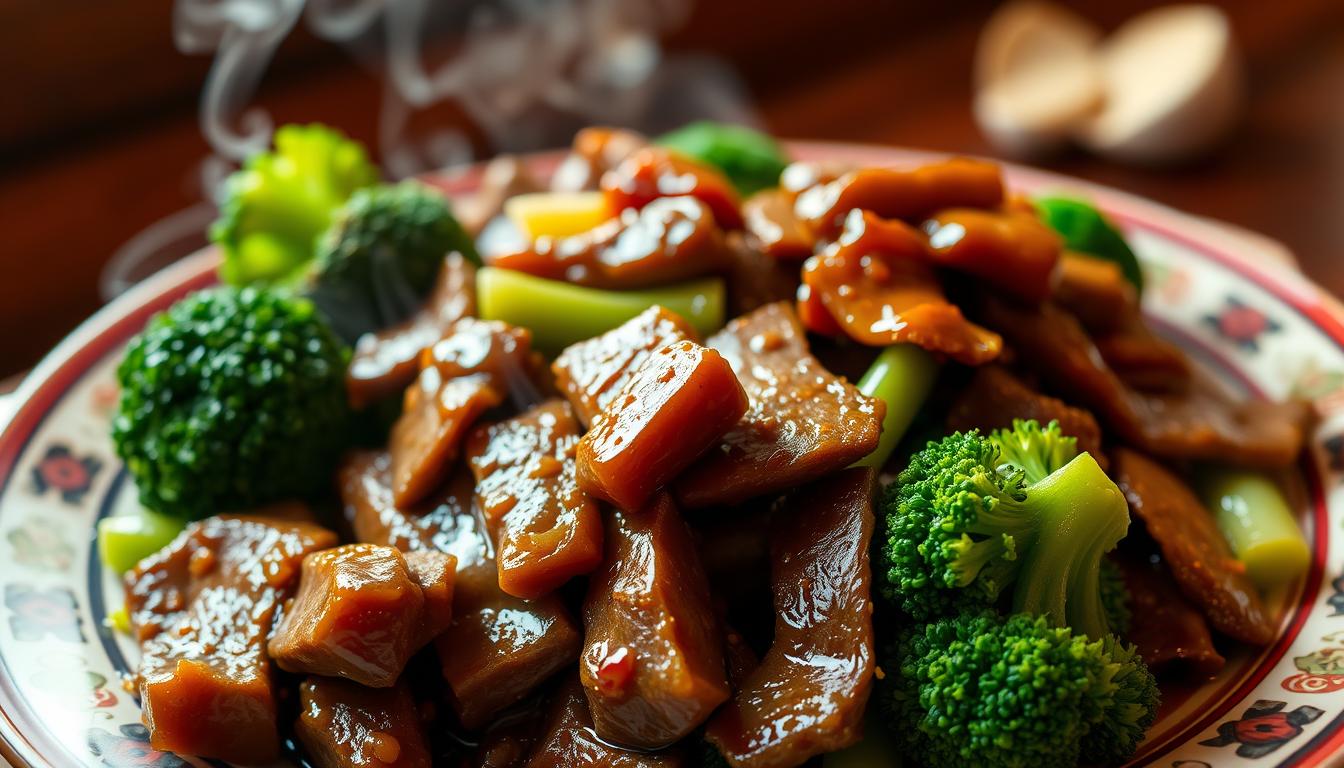
Opening a container of beef and broccoli from your favorite Chinese restaurant is magical. The aroma of savory soy sauce and nutty sesame oil makes your mouth water. You’ve ordered it many times, but have you ever wondered why it tastes so good? The secret is simple.
You can make this beloved dish at home. Beef and broccoli is a Chinese-American classic. It combines tender beef with crisp broccoli in a savory sauce. This recipe is easy and quick, ready in about 30 minutes with common ingredients like soy sauce and sesame oil.
The secret to tender beef is velveting. This traditional Chinese method makes beef silky and juicy. A simple cornstarch coating and brief marinade turn ordinary beef into restaurant-quality bites.
In this article, you’ll learn how to make this dish at home. You’ll find out the best beef cuts, the cooking process, and tips from restaurants. Making beef and broccoli at home lets you control the ingredients and flavors.
Table of Contents
What Makes Beef and Broccoli a Chinese-American Classic
When you order chinese beef and broccoli, you’re diving into a dish with a rich history. It’s a mix of cultures and cooking styles. This dish shows how immigration, creativity, and food traditions evolve.
This beloved dish didn’t start in China. It was created by Chinese immigrants in California in the 1800s. They used their cooking skills with American ingredients, making a new cuisine.
Origins in California’s Chinese Immigrant Communities
Chinese immigrants in California faced big challenges in the 1800s. They brought their cooking skills, like stir-frying, from Cantonese traditions. These cooks made dishes that were tasty and looked great.
They opened restaurants for both Chinese workers and curious Americans. To please American tastes, they changed their recipes. Chinese beef and broccoli became a hit, blending traditional cooking with American tastes.
- Chinese cooks used traditional Cantonese stir-fry methods
- They adapted recipes to feature familiar American ingredients
- Restaurants opened in California’s Chinese communities during the 1800s
- These establishments served both immigrant and American customers
How American Broccoli Replaced Chinese Broccoli
Adapting the vegetable was a key change in making authentic chinese beef and broccoli. In China, they used gai lan, a leafy green. It’s different from the broccoli we know today.
In California, they couldn’t find gai lan. American broccoli was easy to find and cheap. It had bigger florets and thicker stalks, but it worked well for American tastes.
By the 1920s, beef and broccoli was a staple in Chinese-American restaurants. It became even more popular over the 20th century. Now, it’s a top choice at Chinese takeout places across the country.
| Time Period | Development | Key Details |
|---|---|---|
| 1800s | Immigration and Adaptation | Chinese immigrants arrive in California and adapt Cantonese cooking techniques |
| Late 1800s | Ingredient Substitution | Chinese broccoli replaced with American broccoli due to availability |
| 1920s | Menu Standardization | Chinese beef and broccoli becomes common on restaurant menus |
| 1900s-Present | Widespread Popularity | Remains one of the most popular takeout dishes in America |
“Food is memory made edible. Chinese beef and broccoli carries within it the story of immigrant resilience and cultural adaptation.”
This dish is more than a recipe. It’s a story of cultural survival and growth. Chinese cooks adapted without losing their core techniques. Their creativity gave America a beloved classic.
Essential Ingredients for Authentic Beef and Broccoli
Starting to make garlic beef and broccoli at home means getting the right ingredients. You need quality stuff to build flavor and get that restaurant feel. Knowing what each ingredient does helps you choose wisely when shopping and cooking.
The base ingredients are key. You’ll need thinly sliced beef (1 to 1.5 pounds), fresh broccoli florets (about 4 cups from 2 small heads), and some pantry staples. These turn simple items into something amazing.
The sauce is what ties everything together. Low-sodium soy sauce (1/3 to 1/4 cup) lets you control salt. Oyster sauce (2 tablespoons) adds depth and sweetness, making it taste like a restaurant dish. These two are the sauce’s core.
Aromatic ingredients make the dish flavorful. You’ll use minced garlic (2 to 4 cloves) and grated fresh ginger (1/2 inch piece). Scallions add brightness to every bite.
Core Sauce Components
- Sesame oil (1 teaspoon) for a nutty aroma
- Shaoxing wine or dry sherry (2 tablespoons) for complexity
- Rice vinegar (2 tablespoons) for sweet acidity
- Brown sugar (2 tablespoons) to balance flavors
- Low-sodium beef broth (2/3 cup) for richness
- Cornstarch for both marinating and thickening
Cornstarch is key in your recipe. It tenderizes the beef and makes the sauce smooth. Vegetable oil is needed for high-heat cooking and searing. You can add optional ingredients like baking soda (1/4 teaspoon) for tender meat or sriracha for heat.
The Secret to Tender Beef: Velveting Technique Explained
The secret to tender beef and broccoli is velveting. This Chinese cooking method makes meat silky and tender. It locks in moisture, so the beef stays juicy while searing.
Mastering velveting makes your dish as good as takeout. It seals in juices, giving you that tender texture. Knowing this technique helps you cook like a pro at home.
How Cornstarch Transforms Your Meat
Cornstarch is key in velveting. It coats the beef, keeping it moist. When heated, it browns the outside while keeping the inside juicy.
Your velveting marinade should include:
- 2 tablespoons cornstarch
- Soy sauce (2 tablespoons)
- Oyster sauce (1 tablespoon)
- Ground black pepper (½ teaspoon)
- Baking soda (¼ teaspoon, optional)
The cornstarch and other ingredients tenderize the meat gently. This keeps your dish flavorful and tender.
Proper Marinating Time for Maximum Tenderness
Marinating time is crucial for velveting. Marinate for at least 10 minutes for a good coat. For even more tenderness, marinate for 20-30 minutes. This lets the marinade penetrate deeper.
Here’s a practical guide for marinating:
| Marinating Time | Tenderness Level | Best For |
|---|---|---|
| 10 minutes | Good | Quick meals when time is limited |
| 20 minutes | Excellent | Standard beef and broccoli recipes |
| 30 minutes | Superior | Maximum tenderness and flavor |
A helpful tip: freeze your beef for 20 minutes before slicing. This makes it firmer and easier to cut. Thinner cuts marinate better and cook faster, making your dish tender and quick.
Building the Perfect Savory Sauce
The sauce makes your homemade beef and broccoli go from good to great. It’s all about finding the right mix of flavors. This creates that glossy coating you love from takeout.
Your sauce starts with low-sodium soy sauce for its salty taste. This gives your dish that Asian flavor. Then, add beef broth or water to get the right thickness. This way, the sauce sticks to your meat and veggies without dripping.
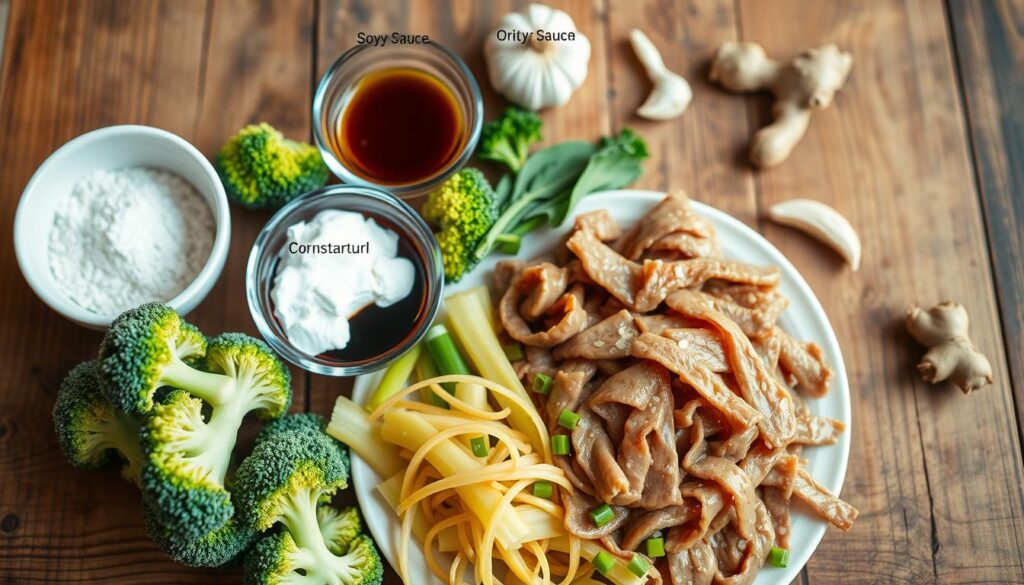
Brown sugar adds a touch of sweetness to balance the salt. Oyster sauce adds a rich umami flavor, key to Chinese-American dishes. Fresh ginger adds a warm, bright taste that complements the richness.
Here are the main sauce ingredients you’ll need:
- Soy sauce—1/4 cup (provides salty foundation)
- Beef broth or water—1/4 to 2/3 cup (adjusts consistency)
- Brown sugar—1-2 tablespoons (adds sweetness)
- Oyster sauce—2 tablespoons (creates umami depth)
- Fresh grated ginger—1 teaspoon (brings warmth)
- Sesame oil—1 teaspoon (adds nutty aroma)
- Cornstarch—1-1.5 tablespoons (creates glossy thickness)
- Sriracha—2 teaspoons optional (for heat)
Cornstarch makes your sauce thick and glossy. Mix all ingredients together before cooking to avoid lumps. This ensures a smooth sauce.
Make your sauce ahead of time and have it ready. If it’s too thick, add a bit of water. If it’s too thin, cook it a bit longer until it’s just right.
Step-by-Step Cooking Process for Restaurant-Quality Results
Making a quick beef and broccoli stir fry at home needs good prep and timing. To get restaurant-quality results, have all your ingredients ready before cooking. This is called mise en place, where everything is sliced, measured, and near your stove.
Stir frying is fast, so you can’t prep once it starts. Knowing the right steps and timing is key to success.
Achieving the Perfect Sear on Your Beef
The sear on your beef makes those tasty caramelized edges found in takeout. Start by heating your wok or skillet over high heat for at least two minutes. When it’s ready, your oil should shimmer and lightly smoke.
Cook beef in batches to avoid overcrowding the pan. This keeps the temperature up and prevents steaming instead of searing.
Let each batch cook undisturbed for about one minute. This creates a flavorful char on the surface. Then stir and cook for another minute until the beef is done. Overcooking makes the meat tough, so watch your timing closely. Remove the beef and set it aside on a clean plate.
Timing Your Broccoli for Crisp-Tender Texture
Getting broccoli just right means cooking it through while keeping it crunchy. Heat one tablespoon of oil in your wok over high heat. Stir fry the broccoli for thirty seconds to coat it in oil.
Add two tablespoons of water, cover the wok, and let it steam for one to three minutes. The broccoli should soften slightly but stay crisp. Remove it and set aside.
Your quick beef and broccoli stir fry comes together in the final steps. Return the skillet to medium heat and cook your garlic mixture for two minutes until fragrant. Add the broccoli back, pour in your sauce, and cover for three minutes.
Uncover, add the beef back, and toss everything together. Cook for two to three minutes, tossing frequently, until the beef is warmed through and the broccoli is perfect.
| Step | Ingredient/Action | Time | Temperature |
|---|---|---|---|
| 1 | Preheat wok with oil | 2 minutes | High heat |
| 2 | Stir fry broccoli, add water, steam | 1-3 minutes | High heat |
| 3 | Sear beef in batches (undisturbed, then stir) | 1-2 minutes per batch | High heat |
| 4 | Cook garlic mixture | 2 minutes | Medium heat |
| 5 | Add broccoli and sauce, cover | 3 minutes | Medium heat |
| 6 | Return beef, toss and finish | 2-3 minutes | Medium heat |
Master the stir fry beef and broccoli technique by respecting each component’s cooking time. Your broccoli needs less time than your beef, so cook it first and set it aside. The garlic and ginger build flavor in the sauce, and everything comes together in the final minutes. With proper timing and technique, you’ll achieve that restaurant-quality meal right in your own kitchen.
Common Mistakes to Avoid When Making Stir Fry Beef and Broccoli
Making great beef and broccoli at home is more than just using good ingredients. It’s all about how you cook it. Knowing what mistakes to avoid helps you make dishes that always taste amazing.
The biggest mistake is crowding the pan with too much beef. Adding too much meat at once lowers the pan’s temperature. This makes your beef steam instead of sear, leading to tough, gray pieces. Cook your beef in smaller batches. It takes a bit longer, but it’s worth it for the taste.
Your success depends on the pan temperature. The oil should shimmer and slightly smoke before adding beef. Use the water droplet test: a single drop should bead up and dance. A cool pan means disappointing beef and broccoli every time.
Preparation is key. Stir frying is fast, so have everything ready before starting. Slice your beef, cut your broccoli, mince your garlic, and mix your sauce ahead of time. Rushing to chop vegetables while cooking can burn your garlic and overcook your ingredients.
Key Mistakes to Skip
- Slicing beef with the grain instead of across it, making meat tough and chewy
- Marinating for less than 10 minutes, preventing proper velveting
- Overcooking broccoli until it turns dull yellow-green and loses its crunch
- Skipping the mise en place preparation step
- Using medium heat instead of high heat for searing
Keep an eye on your broccoli. It should stay bright green and slightly crunchy. The sauce and heat will continue cooking it after you take it out. So, remove it early to keep it fresh and vibrant, not soft and mushy.
Best Cuts of Beef and Preparation Tips
Choosing the right beef cut is key for a great beef and broccoli dish. The meat’s tenderness and how well it soaks up sauce depend on it. Knowing what to look for at the butcher shop boosts your confidence.
Why Flank Steak Works Best
Flank steak is the top pick for this dish. It comes from the cow’s belly and has lots of marbling. This fat makes the steak juicy and adds a deep, beefy flavor.
The steak’s grain is easy to see, making slicing simple. You’ll need 1 to 1.5 pounds for 4 to 6 people. Skirt steak is a good substitute if you can’t find flank steak.
Sirloin is a budget-friendly choice. Look for a piece with a fat cap. This fat keeps the meat moist while it cooks.
Slicing Against the Grain for Maximum Tenderness
The key to tender beef and broccoli is slicing against the grain. This means cutting across the muscle fibers, not with them.
Examine your meat to find the grain lines. Cut across these lines for tender bites. This method shortens the fibers, making your steak tender.
- Freeze your flank steak for 20 minutes before slicing
- Slice pieces about 1/4 inch thick
- Cut perpendicular to the visible grain lines
- Never freeze the meat solid
Freezing the steak briefly makes it firm enough for even slices. Thinner slices marinate and cook faster, staying tender under high heat.
Serving Suggestions and Variations
You’ve learned how to cook beef and broccoli. Now, let’s talk about how to serve it. Serving it over steamed white rice is a classic choice. This way, you can put rice in bowls and add your stir-fry on top.
The rice absorbs the sauce’s flavors. It also lets the beef and broccoli stand out.
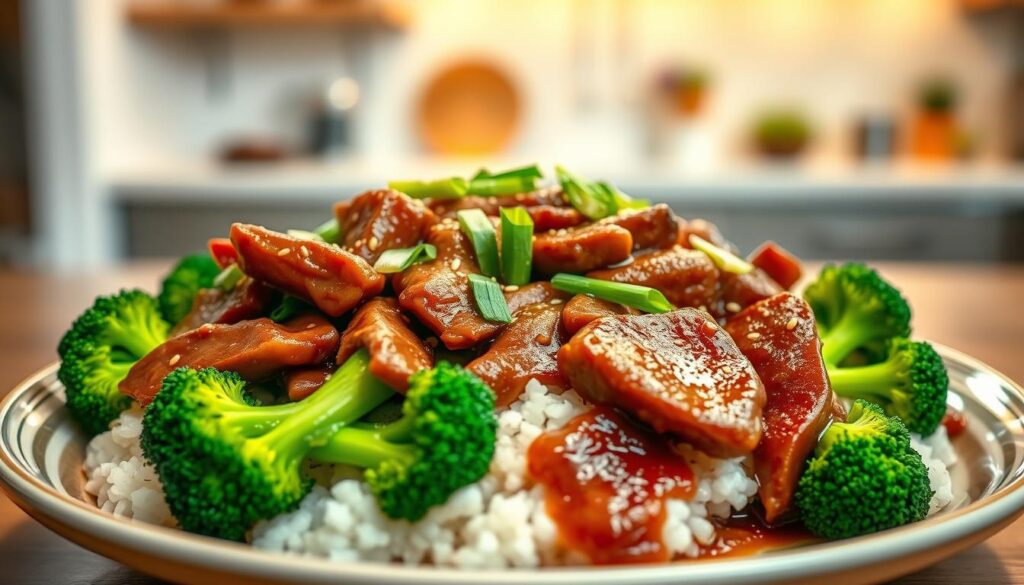
But rice isn’t the only option. Beef and broccoli also taste great over egg noodles or lo mein. These choices make the meal more filling and interesting.
Building a Complete Meal
Make your beef and broccoli into a full Chinese-American meal. Add side dishes like:
- Yang Chow fried rice for an authentic takeout experience
- Pan-fried noodles for added textural contrast
- Scallion pancakes as a savory starter
- Smashed cucumber salad for refreshing crunch
- Lumpia for an extra appetizer component
Don’t forget the finishing touches. Sprinkle toasted sesame seeds for a nutty crunch. Add sliced green scallions for fresh color and flavor.
Recipe Variations and Storage Tips
You can make your beef and broccoli your own way. Filipino cooks add liquid seasoning like Knorr for extra flavor. Cooking beef in batches prevents steaming. Broccoli cooks well in one batch.
Store leftovers in an airtight container in the fridge for three days. It’s perfect for busy weeks.
Conclusion
You now have all the tools to make beef and broccoli at home. This Chinese-American classic is ready in just 30 minutes. You can make dishes as tasty as your favorite takeout.
The secret to great beef and broccoli is simple. Velveting the beef makes it tender. High heat gives a perfect sear. Slicing against the grain makes it easy to chew.
Having all ingredients ready before cooking makes the process smooth. Your pantry probably has everything for the savory sauce. Soy sauce, garlic, ginger, and cornstarch create a rich coating.
Start cooking beef and broccoli tonight. The techniques work for many stir-fry dishes. Try different variations and make it your own. With this knowledge, you can make delicious beef and broccoli at home.