Beef Stroganoff: Classic Comfort Food Explained
There’s something deeply satisfying about a warm bowl of creamy beef stroganoff on a chilly evening. It brings back memories of family dinners or meals at trusted restaurants. Beef stroganoff is a mix of elegance and comfort, perfect for both fine dining and weeknight meals.
You might think making restaurant-quality beef stroganoff takes hours or culinary training. But the truth is different. This classic recipe takes about thirty minutes to make. It’s a dish from Russian aristocratic heritage, loved in kitchens worldwide.
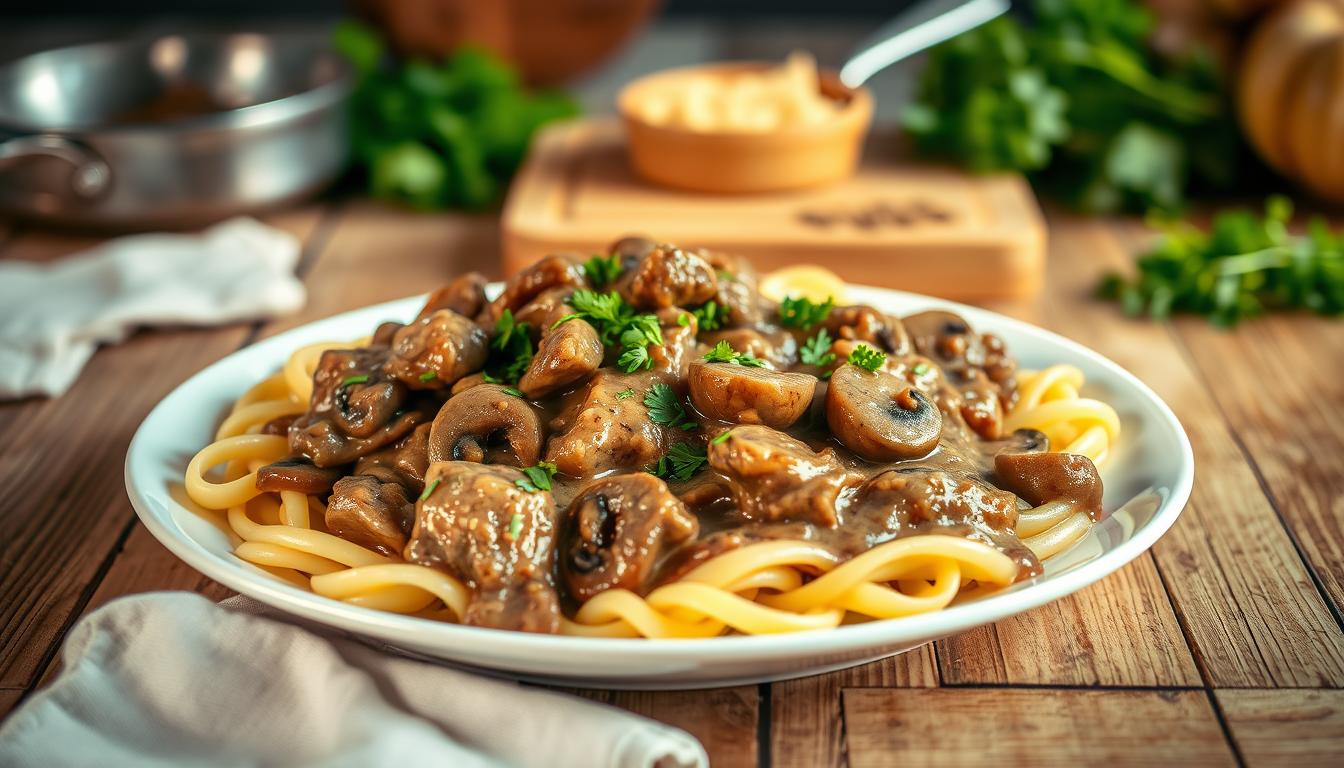
Beef stroganoff is special because of its flavors and textures. It has browned beef, caramelized onions, and sautéed mushrooms. A rich sauce made with stock, sour cream, and Dijon mustard brings it all together. Served over egg noodles, the sauce clings to every strand, making each bite perfect.
This guide will teach you how to make beef stroganoff at home. You’ll learn how to avoid a curdled sauce, choose the right beef, and why this dish is timeless. Whether for family or dinner guests, you’ll find making great stroganoff at home is achievable.
Table of Contents
What is Beef Stroganoff and Why It’s a Timeless Classic
Beef stroganoff is a beloved comfort dish around the world. It’s a mix of tender meat and a rich sauce that delights your taste buds. Making homemade beef stroganoff connects you to European culinary traditions.
This dish is special because of its perfect mix of flavors and textures. It’s a favorite among home cooks everywhere.
Understanding beef stroganoff’s appeal helps you see why it’s loved for so long. Quality ingredients and cooking techniques make it magical.
The Origins of This Russian Masterpiece
Beef stroganoff comes from 19th-century Russia. Count Stroganoff’s chef created it. The dish is a blend of Russian and French influences.
French cuisine was big among Russian nobles then. But the chef made it distinctly Russian with local ingredients.
This dish started in a noble home and spread worldwide. Today, you can make sour cream beef stroganoff at home, tracing back to that 19th-century kitchen.
Key Components That Define Authentic Stroganoff
Authentic beef stroganoff needs certain ingredients. Your sour cream beef stroganoff must have quality elements.
| Component | Purpose | Flavor Impact |
|---|---|---|
| Tender Beef | Main protein that anchors the dish | Rich, savory, meaty foundation |
| Caramelized Onions | Creates depth and sweetness | Sweet, golden, umami-rich base |
| Mushrooms | Traditional Russian ingredient adding earthiness | Earthy, savory, hearty texture |
| Sour Cream | Creates the signature creamy sauce | Tangy, rich, smooth finish |
| Beef Stock | Builds savory depth and moisture | Deep, beefy, luxurious quality |
| Dijon Mustard | Adds complexity and subtle heat | Spicy, sophisticated undertone |
Each ingredient in homemade beef stroganoff is crucial. Beef provides substance, while mushrooms and onions add flavor. Sour cream makes the sauce silky and luxurious.
Respecting these core components makes your sour cream beef stroganoff authentic. It’s a mix of Russian tradition and French technique. This balance is why it’s loved by families worldwide.
Choosing the Perfect Cut of Beef for Your Stroganoff
The beef cut you choose affects how fast your stroganoff cooks and how tender it is. You want tender beef stroganoff that’s easy to chew and cooks quickly. Different cuts need different cooking methods, so it’s important to know your options.
For quick stroganoff recipes, pick tender cuts that cook fast. Top sirloin is the top choice because it’s flavorful, lean, and tender when sliced thinly. It’s a budget-friendly option for tender beef stroganoff.
If you’re willing to spend more, boneless ribeye steak is a great choice. Its marbling makes it very tender and easy to cook. This cut is perfect for making restaurant-quality tender beef stroganoff at home.
For special occasions, beef tenderloin or filet mignon is the way to go. It has a melt-in-your-mouth texture that wows guests. Ground beef is also a good choice for quick cooking.
Tougher cuts like chuck roast or bottom round need a different approach. They require long, slow cooking to become tender. Use slow cookers or pressure cookers for these cuts, treating stroganoff like a traditional stew.
- Top sirloin: lean, flavorful, affordable
- Ribeye: well-marbled, rich, forgiving
- Tenderloin: extremely tender, premium choice
- Ground beef: quick cooking alternative
- Pork tenderloin: budget-friendly Russian option
Many Russian cooks use pork tenderloin as a budget-friendly yet tasty option. It offers a different choice beyond traditional beef without breaking the bank.
Essential Ingredients That Make Creamy Beef Stroganoff Irresistible
To make a delicious creamy beef stroganoff, you need to know each ingredient’s role. Each part works together to create rich flavors and a smooth sauce. Choosing quality ingredients and understanding their importance is key to success.
The Role of Sour Cream in Traditional Recipes
Sour cream is the heart of creamy beef stroganoff. It makes the sauce tangy and luxurious. You must use full-fat sour cream for the right texture and taste.
Low-fat sour cream makes the sauce watery and can curdle. If you find the tang too much, mix it with heavy cream. But, full-fat sour cream is essential for the authentic flavor and creamy texture.
Mushrooms and Aromatics: Building Layers of Flavor
Mushrooms add depth and richness to mushroom beef stroganoff. They bring earthy, umami flavors that complement beef and cream. As they cook, they release moisture and concentrate their flavors.
Onions and garlic start the aromatic base. Caramelized onions add sweetness and body. Garlic adds a sharp, savory taste that enhances the sauce.
| Ingredient | Purpose | Key Benefit |
|---|---|---|
| Beef (sirloin or chuck) | Main protein | Provides savory richness and meaty depth when seared |
| Onions | Aromatic base | Creates sweetness and body when caramelized |
| Garlic | Aromatic base | Adds sharp, savory depth to the sauce |
| Mushrooms | Flavor enhancer | Delivers earthy umami notes and texture |
| Sour cream | Sauce foundation | Creates creamy texture and tangy flavor |
| Dijon mustard | Flavor balance | Cuts through richness and prevents flatness |
| Worcestershire sauce | Umami boost | Amplifies beefiness and savory depth |
Additional supporting ingredients enhance your creamy beef stroganoff. Dijon mustard and Worcestershire sauce balance the flavors. Beef stock adds body and beefiness. Flour thickens the sauce. Brandy or white wine deglazes the pan, capturing all the flavors.
- Use oil for high-heat searing without burning the meat
- Choose butter for sautéing aromatics to add rich flavor
- Select full-fat sour cream for authentic texture
- Include fresh mushrooms for best umami results
Step-by-Step Guide to Making Classic Beef Stroganoff
Making easy beef stroganoff at home is easier than you think. This classic dish takes about 45 minutes to make. The secret to success is following each step carefully and knowing why each step is important.
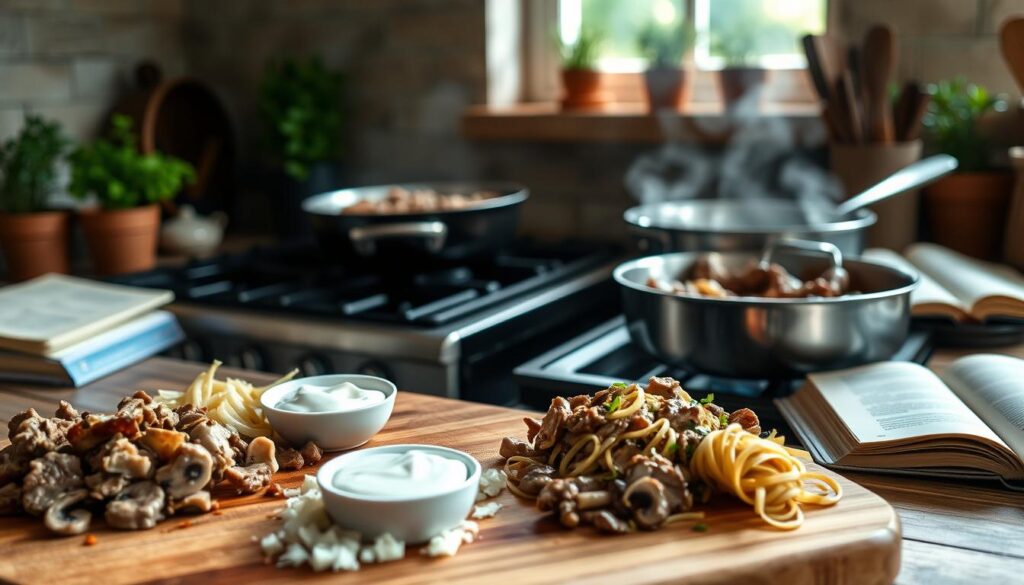
Begin by preparing your beef right. Remove any excess fat or tough parts. Cut the beef into thin strips, cutting across the grain for tenderness. Dry the strips with paper towels to help them brown better. Season with salt and pepper.
Here are the steps to make your easy beef stroganoff:
- Heat oil in a large skillet over high heat until it shimmers. Add beef in batches to avoid crowding. Sear for 3-4 minutes per side until browned. Transfer to a plate.
- Reduce heat slightly and add butter to the pan. Cook onions until soft and golden, about 3 minutes, scraping up flavorful browned bits.
- Add mushrooms and sauté until their liquid evaporates and edges brown, roughly 3 more minutes.
- Stir in garlic briefly until fragrant, then sprinkle flour over vegetables and cook for a short moment.
- Pour in brandy or wine and let it cook down for 2 minutes. Add beef stock, mustard, Worcestershire sauce, and a bay leaf while scraping up all brown bits from the pan bottom.
- Add heavy cream and simmer until slightly thickened, about 5 minutes.
- Lower the heat and gently stir in sour cream that you’ve first warmed with a bit of sauce to prevent curdling.
- Return the seared beef and its juices to the pan, stirring gently. Warm just until heated through, avoiding prolonged boiling.
| Step Number | Action | Time Required | Key Point |
|---|---|---|---|
| 1 | Beef preparation and seasoning | 10 minutes | Slice across the grain and pat dry |
| 2 | Sear beef in batches | 8 minutes | High heat, single layer per batch |
| 3 | Cook onions | 3 minutes | Scrape up fond from pan |
| 4 | Sauté mushrooms | 3 minutes | Let liquid evaporate completely |
| 5 | Add garlic and flour | 2 minutes | Garlic briefly to avoid bitterness |
| 6 | Deglaze and build sauce | 7 minutes | Capture all browned pan bits |
| 7 | Add sour cream and beef | 5 minutes | Temper sour cream, gentle heating |
Temperature control is key when making easy beef stroganoff. Each heat change has a purpose. High heat for searing creates a golden crust. Lower heat prevents butter from burning while cooking aromatics. The lowest heat during sour cream addition prevents curdling and keeps your sauce silky smooth.
Understanding the searing process is crucial. When beef touches the hot pan in a single layer without crowding, the moisture on the surface evaporates quickly. This allows the meat to brown through the Maillard reaction, creating complex flavors that define restaurant-quality stroganoff. Crowding the pan lowers the temperature and causes steaming instead of browning.
The deglaze step captures all those flavorful browned bits stuck to your pan bottom. These bits contain concentrated beef and vegetable flavors that make your sauce rich and delicious. When you pour in the brandy or wine and scrape with a wooden spoon, you’re essentially making a more flavorful base for your entire dish.
Finally, the gentle reheating of your beef at the end preserves its tenderness. Prolonged boiling toughens the meat you worked so hard to cook properly. Your easy beef stroganoff reaches its best state when beef is warm and sauce is creamy, ready to serve over egg noodles or your preferred base.
Expert Tips for Tender Beef Stroganoff Every Time
Making great beef stroganoff is more than just mixing ingredients. It’s about the technique. Professional cooks know every step is crucial. Your pan, heat, and timing all affect the meat’s tenderness and the sauce’s smoothness.
The right tools make a big difference. Use a wide, heavy skillet, about 12 inches. This size helps the beef brown well, not steam. Don’t use non-stick pans. They stop the brown bits from sticking, which adds flavor.
Searing Techniques for Maximum Flavor
Chill your beef and cut it thinly against the grain. This makes it easier to slice and cook evenly. Heat your skillet until it’s very hot before adding the meat.
Here’s how to sear your beef:
- Keep the beef in a single layer to avoid overcrowding
- Sear for about three minutes on each side, depending on thickness
- Leave it slightly pink inside since it will cook more in the sauce
- Don’t stir too much; let it form a golden crust
- Use clarified butter or oil and butter mix to prevent burning
Many home cooks miss the trick of undercooking the beef slightly. Since it will reheat in the sauce, stop cooking just before it’s fully done. This prevents tough beef stroganoff.
Preventing Curdled Sauce: Temperature Control Matters
A curdled sauce is a disaster. The fix is gentle heat and the right way to add dairy. Let mushrooms cook until their liquid is gone. This makes their flavor stronger and prevents a watery sauce.
Here’s how to keep your sauce smooth:
- Remove the pan from heat before adding sour cream
- Mix hot sauce into cold sour cream first—this is tempering
- Stir the sour cream mixture into the pan with gentle heat
- Never let the sauce boil after adding dairy
- Keep the heat low, around 160-180°F
“Curdling happens because heat breaks down the proteins in sour cream. By keeping temperatures low and tempering the dairy gradually, you keep your stroganoff sauce creamy and smooth.”
Taste your beef stroganoff near the end and adjust flavors as needed. If it tastes dull, add more mustard or Worcestershire sauce. These will enhance the flavor without changing the texture. Your stroganoff will taste like it’s from a pro kitchen when you master these techniques.
Popular Variations and Modern Twists on the Traditional Recipe
Beef stroganoff variations show how versatile this dish is. You can change the recipe to fit your budget and taste. It’s a comfort food that works well with different proteins and flavors.
One popular twist uses ground beef instead of cubed steak. It’s cheaper and cooks fast, perfect for families. Ground beef stroganoff is tender in just 20 minutes, making dinner easy.
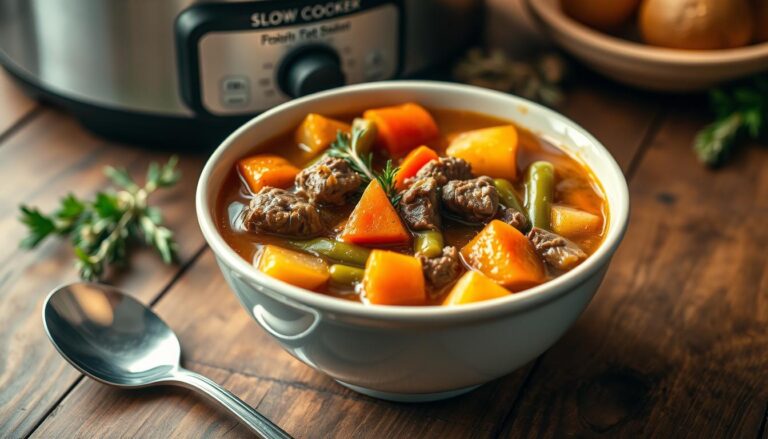
Slow-cooker stroganoff makes tough cuts tender. Cook the beef low for 6 to 8 hours. Add sour cream at the end to keep the flavor rich.
Protein and International Adaptations
You can use chicken, pork, or meatballs instead of beef. Chicken stroganoff cooks quickly to avoid dryness. Russian cooks make pork stroganoff just as well. Meatball stroganoff is great for busy days.
- Ground beef stroganoff—quick and kid-friendly
- Slow-cooker stroganoff—economical and tender
- Chicken stroganoff—lighter protein option
- Pork stroganoff—traditional Russian preparation
- Meatball stroganoff—easy shortcut version
International stroganoff recipes add new flavors. Brazilian versions add tomato sauce for a tangy twist. Japanese stroganoff is served over white rice with parsley and butter. Lighter versions use less cream and more broth.
Gluten-free stroganoff uses cornstarch instead of flour. It’s great over gluten-free pasta, rice, or potatoes. Mushroom-free versions add onions or carrots for extra flavor.
| Variation Type | Main Protein | Cooking Method | Key Flavor Change |
|---|---|---|---|
| Ground Beef | Ground beef | Skillet—20 minutes | Quick and accessible |
| Slow-Cooker | Chuck roast | Slow cooker—6-8 hours | Deep, tender richness |
| Chicken | Chicken pieces | Skillet—15-18 minutes | Lighter and leaner |
| Brazilian | Diced beef | Skillet with tomato sauce | Tangy and bold |
| Japanese | Beef or chicken | Standard preparation | Served over seasoned rice |
These variations show that you can always try something new. Each recipe offers unique benefits for your family’s needs.
Best Side Dishes to Serve with Homemade Beef Stroganoff
The right side dish can make your beef stroganoff meal complete. Your choice affects how the flavors mix and the sauce coats each bite. Knowing the best sides can make your dish taste authentic and delicious.
Different sides add unique textures and tastes. Some are traditional, while others are modern. Your choice depends on whether you prefer comfort or authenticity.
Why Egg Noodles Are the Classic Choice
Egg noodles are the American favorite for stroganoff. Their wide shape holds the creamy sauce well. This makes every bite full of flavor.
Buttery egg noodles add richness to the dish. They contrast nicely with the soft beef. The sauce stays on the noodles, not at the bottom of the plate.
The egg noodle and stroganoff combo is popular in homes and restaurants. The noodles don’t overpower the sauce’s flavors. It’s a comforting yet elegant dish.
Russian-Style Serving Suggestions with Potatoes
In Russia, mashed potatoes are the top choice for stroganoff. They add a creamy, comforting touch. This makes the dish even more satisfying.
Russian restaurants also serve stroganoff with crispy fries or shoestring potatoes. The crunch of these potatoes contrasts nicely with the soft beef and sauce. It’s a delightful mix of textures.
Traditional sides for stroganoff include dill pickles and fresh parsley. Pickles add a tangy touch, while parsley brings freshness. Both balance the dish’s richness.
| Side Dish | Origin/Style | Texture | Flavor Profile | Best For |
|---|---|---|---|---|
| Egg Noodles | American Traditional | Soft, Tender | Buttery, Neutral | Classic American Meals |
| Mashed Potatoes | Russian Home Style | Creamy, Smooth | Rich, Herbed | Comfort Food Experience |
| Oven-Baked Fries | Russian Restaurant Style | Crispy, Crunchy | Savory, Salty | Textural Contrast |
| White Rice | Japanese Adaptation | Fluffy, Light | Neutral, Absorptive | Lighter Meals |
| Rye Bread | Russian Authentic | Dense, Chewy | Earthy, Tangy | Complete Authentic Meals |
Homemade rye bread is perfect for an authentic Russian meal. It soaks up the sauce, making the dish deeply satisfying.
Rice is another great option, especially plain white rice or rice with parsley and butter. This combo is popular in Japan. It lets the stroganoff flavors shine without being overpowered.
- Buttery egg noodles catch and hold the creamy sauce perfectly
- Herb-infused mashed potatoes provide authentic Russian home-style comfort
- Crispy oven-baked fries create textural contrast at Russian restaurants
- Dill pickles cut through richness with bright acidity
- Fresh parsley garnish balances heavy cream and beef flavors
- White rice absorbs sauce beautifully in lighter preparations
- Homemade rye bread completes an authentic Russian meal
Your choice of side dish depends on the meal you want to serve. Go for egg noodles for a classic American feel or mashed potatoes for a Russian touch. Either way, you’ll have a meal that’s sure to please everyone.
Storage, Reheating, and Make-Ahead Instructions
Proper beef stroganoff storage lets you enjoy it all week. It stays fresh in the fridge for 4 to 5 days in an airtight container. This is great for meal prep or leftovers. Knowing how to store and reheat keeps it creamy and tender.
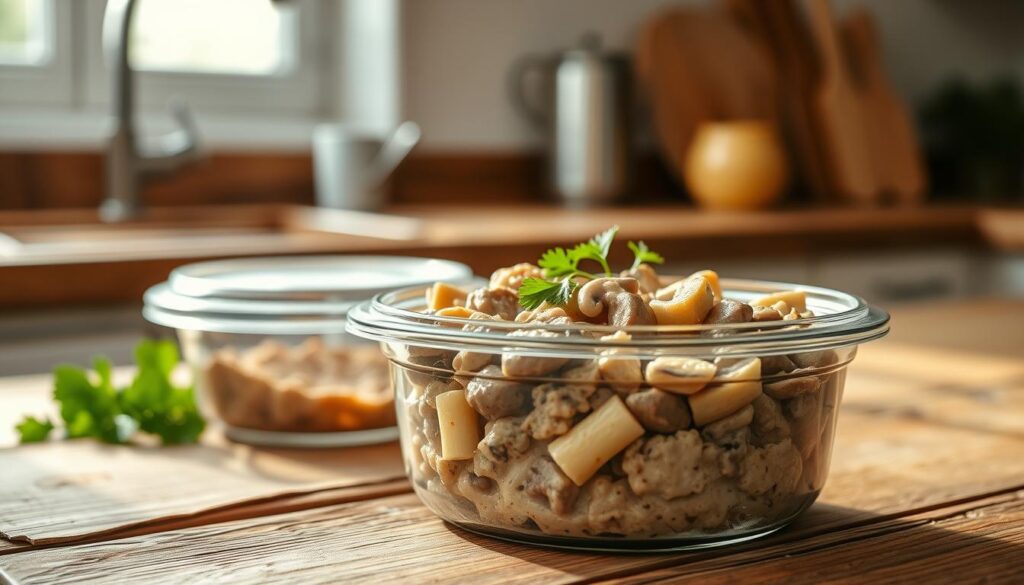
Reheating leftover stroganoff needs care. The stovetop is best for warming it up. Use low heat and stir often to avoid sticking and curdling. If it thickens too much, add a bit of beef stock, cream, or milk to make it smooth again.
Best Methods for Reheating Your Stroganoff
- Heat on the stovetop over low to medium-low heat with frequent stirring
- Add liquid gradually if sauce becomes too thick
- Never allow the sauce to boil or simmer aggressively
- Microwave reheating works but requires careful monitoring to prevent curdling
- Let beef reach proper warmth throughout before serving
Freezing Your Stroganoff: What You Should Know
Freezing stroganoff with cream sauces is tricky. Sour cream can separate and become grainy after thawing. Use heavy cream or crème fraîche instead for better freezing results.
To freeze stroganoff, cool it completely first. Then, portion it into freezer-safe containers. Thaw slowly in the fridge, not at room temperature. Gentle reheating helps ingredients blend smoothly again.
Make-Ahead Strategies for Convenience
Make stroganoff ahead without losing quality. Cook the beef and mushroom base first, then store them separately. Add sour cream only when reheating. This keeps the dish creamy and convenient.
| Storage Method | Time Frame | Best Practices | Texture Quality |
|---|---|---|---|
| Refrigerator Storage | 4 to 5 days | Use airtight containers, store in coldest part of fridge | Excellent, minimal changes |
| Freezer (with heavy cream) | 2 to 3 months | Cool completely, portion into freezer containers, thaw in fridge | Good, minimal separation |
| Freezer (with sour cream) | 2 to 3 months | Not recommended due to sauce separation | Fair, grainy texture after thawing |
| Make-Ahead Base Only | 4 to 5 days | Store beef and mushrooms separately, add sour cream at reheating | Excellent, fully preserved |
Proper handling of leftover stroganoff keeps it tasty and safe. Store containers after cooling. Thaw frozen portions in the fridge overnight. Gentle reheating is key to keeping the beef tender and the sauce creamy.
Conclusion
You now have all you need to make classic beef stroganoff at home. This dish shows that top-notch food is easy to make. It’s not hard once you know the basics.
Quality beef, proper searing, and keeping the right temperature are key. These steps help you make a great dish.
Homemade stroganoff combines tender meat, mushrooms, and creamy sauce. Choosing the right beef and browning it well is crucial. This builds deep flavor.
Keeping the sauce smooth and creamy is important. This makes the dish special. You now know how to avoid curdling and achieve that silky texture.
You can serve your stroganoff over egg noodles, mashed potatoes, or rice. Pick what your family likes best. You can stick to traditional ways or try new flavors.
Making homemade stroganoff is simpler than you might think. With the right ingredients and techniques, you can impress everyone. Your weeknight dinners will be a hit.
With what you’ve learned, classic beef stroganoff is now your favorite dish. It brings joy and satisfaction every time you make it.