Beer Batter Fish Recipe: Crispy Homemade Guide
There’s something magical about biting into a perfectly fried piece of fish. The golden exterior shatters between your teeth while the inside stays moist and tender. You know the feeling—that moment when you’re at your favorite seaside restaurant or local fish fry, and the plate arrives with that beautiful, crackling coating. You can create that same magic in your own home with the right beer batter fish recipe.
Fish and chips started in Britain during the mid-1800s as a beloved street food in seaside towns and busy cities. The dish traveled across the ocean and found a special home in American culture. In Buffalo, Friday night fish fries became a cherished tradition, drawing crowds year-round but reaching peak popularity during Lent. This simple meal represents more than just food—it’s about comfort, tradition, and gathering with people you care about.
The secret to crispy beer battered fish lies in understanding how the right technique transforms a basic batter into something extraordinary. The carbonation creates tiny bubbles that fry up into a light, shatteringly crisp coating. The beer itself adds flavor and helps achieve that perfect golden-brown color. This comprehensive guide walks you through every step of making restaurant-quality crispy beer battered fish at home.
You’ll discover how to select the best fish, mix the ideal batter, maintain proper oil temperature, and plate your creation like a pro. Whether you’re cooking for your family or impressing guests, this guide gives you the knowledge and confidence to succeed. The process is simpler than you might think, and the results speak for themselves.
Table of Contents
Key Takeaways
- Beer batter creates a light, crispy coating because carbonation produces tiny air bubbles that fry to perfection
- Selecting fresh white fish varieties like cod or pollock gives you the best texture and flavor
- Light lagers and pale ales work best for your beer batter fish recipe, providing flavor without overwhelming the fish
- Proper oil temperature between 350°F and 375°F ensures a crispy exterior while keeping the inside moist
- Cornstarch mixed into your batter boosts crunchiness and helps achieve that restaurant-quality texture
- Quick reheating in an oven at 375°F keeps leftover crispy beer battered fish crunchy, not soggy
- Homemade tartar sauce and classic side dishes like coleslaw and fries complete the traditional presentation
What Makes Beer Batter Fish So Crispy and Delicious
When you make fried fish with beer batter, you’re doing something special. Beer adds unique properties that make the coating golden and crunchy. It has carbonation, sugars, and proteins that water can’t match.
The Science Behind Beer in Batter
Beer is key to a great batter for fried fish. The alcohol in beer evaporates quickly, leaving a light crust. This is better than water-based batters.
The beer’s sugars also start the Maillard reaction. This process gives the batter a golden color and complex flavor.
Beer’s acids tenderize the coating and prevent gluten buildup. Gluten makes batters tough. So, beer batter is tender and tastes better than simple flour-and-water recipes.
Why Carbonation Creates the Perfect Crunch
Carbonation is what makes beer batter special. The bubbles in beer create air pockets in the batter. When these bubbles hit hot oil, they expand and leave behind crispy layers.
Keeping everything cold is important. Cold beer keeps its bubbles longer. Open your beer just before mixing to get the most carbonation. This makes your fried fish with beer batter extra crispy.
| Batter Component | Function | Impact on Texture |
|---|---|---|
| Cold Beer | Provides carbonation and flavor | Creates light, airy coating with crispy layers |
| Cornstarch | Absorbs moisture | Prevents sogginess and enhances crunch |
| Beer’s Alcohol | Evaporates during frying | Produces delicate, tender crust |
| Beer’s Sugars | Triggers browning reactions | Delivers golden color and rich flavor |
Knowing the science behind beer batter helps you see why it’s better than regular batter. The mix of carbonation, sugars, acidity, and alcohol creates a perfect texture and taste. This is why people love fried fish with beer batter.
Essential Ingredients for the Perfect Beer Batter Fish Recipe
To make easy beer battered fish fillets, you need the right ingredients. Each one is important for that crispy coating everyone loves. Knowing what you need makes cooking easier and better every time.
The dry ingredients are the base of your batter. Mix all-purpose flour with cornstarch for the right texture. Flour helps the coating stick to the fish. Cornstarch makes it extra crispy by absorbing moisture.
Baking powder adds lift to your batter. It introduces air bubbles, making the fish fillets light and not heavy. Just a little is needed for this effect.
Your Seasoning Blend
Seasonings make your batter taste great. Use these key elements:
- Salt for flavor and seasoning
- Garlic powder for savory taste
- Onion powder for extra umami
- Sweet paprika for color and warmth
The wet ingredients are just as important. Beer is key—pick a light, bubbly one like a lager. Cold beer creates crispy air pockets. Use ice-cold beer or non-alcoholic beer if you prefer.
Oil and Fish Selection
For frying, use a neutral oil with a high smoke point. Vegetable oil, canola oil, and peanut oil are good choices. Peanut oil is best for its clean flavor and frying ability. You’ll need several cups of oil to fry the fish evenly.
| Ingredient | Amount | Purpose |
|---|---|---|
| All-Purpose Flour | 1 Cup | Base structure for batter coating |
| Cornstarch | ¼ Cup | Creates crispness and prevents sogginess |
| Baking Powder | 1 Teaspoon | Adds lift and air bubbles for texture |
| Salt | ½ Teaspoon | Basic seasoning foundation |
| Garlic Powder | ½ Teaspoon | Savory flavor depth |
| Onion Powder | ½ Teaspoon | Additional umami richness |
| Sweet Paprika | ¼ Teaspoon | Golden color and subtle flavor |
| Light Beer (Cold) | 1 Cup | Creates carbonation for crispiness |
| Neutral Oil | 3-4 Cups | Frying medium with high smoke point |
| White Fish Fillets | 1.5-2 Pounds | Primary ingredient for coating |
Quality ingredients are key to great easy beer battered fish fillets. Fresh fish and stored ingredients make your dish taste fresh and delicious. Have these essentials ready before cooking, and you’ll make restaurant-quality fish anytime.
Choosing the Best Fish for Beer Battered Perfection
Choosing the right fish is key for a great cod beer batter recipe. Look for fish that is firm, meaty, and has a mild flavor. This helps the fish stay intact while frying.
Delicate fish can break apart when battered and fried. So, pick sturdy white fish that can handle the batter well.
The taste and texture of your meal depend on the fish you choose. Try to find sustainably sourced fish. It’s better for the ocean and your meal.
Top White Fish Varieties for Frying
Cod is the top choice for traditional beer batter. It has large flakes and a mild flavor. Its firm texture is perfect for frying.
Haddock is another favorite, especially in American fish fries. It tastes slightly sweeter than cod and holds up well during cooking.
There are other great white fish options too:
- Pollock (a more affordable alternative to cod with similar texture)
- Halibut (premium choice with dense, meaty texture)
- Grouper (firm and slightly sweet)
- Sea bass (mild flavor and firm structure)
- Tilapia (budget-friendly and widely available)
- Flounder (delicate but manageable when properly handled)
- Hake (similar to cod with excellent frying qualities)
- Walleye (regional favorite with sweet, mild flavor)
- Perch (smaller option perfect for individual portions)
Each fish has its own taste and texture. Pick what’s fresh and what you like best.
Fresh vs Frozen Fish Considerations
Frozen fish is often easier to find than fresh. But it works great for beer batter too. Most frozen fish is flash-frozen quickly to keep it fresh.
When thawing frozen fish, do it slowly in the fridge. This keeps the fish’s texture and quality better than quick thawing.
For both fresh and thawed fish, dry them well before battering. This prevents the batter from getting soggy. Use paper towels to remove excess moisture.
| Fish Type | Best For | Flavor Profile | Texture | Price Range |
|---|---|---|---|---|
| Cod | Classic fish and chips | Mild, slightly sweet | Large, firm flakes | Moderate to high |
| Haddock | American fish fries | Slightly sweeter than cod | Firm, flaky | Moderate to high |
| Pollock | Budget-conscious cooks | Mild, similar to cod | Firm flakes | Low to moderate |
| Tilapia | Everyday meals | Mild, neutral | Firm, white | Low |
| Halibut | Special occasions | Mild, slightly sweet | Dense, meaty | High |
| Walleye | Regional specialties | Sweet, mild | Firm, delicate | Moderate |
Cut fillets into 3 to 4 inch pieces for even cooking. This size also makes serving easier. Uniform pieces ensure all your fish is cooked right.
Best Beer for Fish Batter and Why It Matters
Choosing the right beer for fish batter makes a huge difference. Look for a light-colored, crisp-tasting beer with lots of carbonation. This choice affects how crispy and light your batter will be. Knowing which beers work best helps you make your dish taste like it’s from a restaurant.
Light lagers and pale ales are great for fish batter. They have clean flavors that won’t mask the taste of the fish. Coors Light, Labatt Blue, Miller Lite, and Budweiser are good choices. Their mild taste and carbonation make the batter crunchy.
Carbonation is key. When you open a cold can or bottle, listen for the hiss. This sound means the beer is bubbly. These bubbles make your batter light and crispy.
Temperature is also important. Use ice-cold beer and open it just before mixing. This keeps the carbonation and texture perfect. Cream ales are another good choice, with their smooth, slightly sweet taste.
Avoid dark beers like stouts or IPAs. Their strong flavors can overpower the fish. Choose lighter, milder beers for the best results.
Non-Alcoholic and Alternative Options
You don’t need alcohol for great beer batter fish. Non-alcoholic lagers work well because of their carbonation. Try Heineken 0.0, Budweiser Zero, Stella Artois 0.0, or Corona Non-Alcoholic Mexican Lager.
Club soda and sparkling water are also great if you don’t want beer. They add carbonation without any beer taste.
- Light lagers: Clean and crisp with excellent carbonation
- Pale ales: Balanced flavor with subtle hoppy notes
- Cream ales: Smooth and slightly sweet
- Non-alcoholic beer: All the carbonation benefits
- Club soda: A zero-alcohol alternative
When picking a beer for fish batter, remember it affects taste and texture. Choose light, well-carbonated beers for the best crispiness. Keep your beer cold, open it fresh, and your homemade fish batter will be top-notch.
How to Make Beer Batter from Scratch
Making beer batter from scratch lets you control the texture and taste. The right method makes a big difference. You’ll get a light, crispy coating instead of a soggy one.
For great homemade beer batter, keep it simple and mix right. Start with dry ingredients, add cold beer last, and don’t overmix. This way, your fried fish will have that perfect golden crunch.
Mixing Techniques for Light and Crispy Coating
Begin by whisking dry ingredients in a shallow bowl. Use flour, cornstarch, salt, and your favorite seasonings. Mix well to spread everything evenly.
Adding beer is key. Pour it in slowly just before frying, not before. This keeps the carbonation for a light texture. Whisk gently as you pour, watching the consistency.
Your batter should be like thin pancake batter, heavy cream, or paint. It should coat fish evenly without clumping. This balance is key for success.
Don’t overmix. Too much stirring makes the batter tough. Aim for a lumpy batter instead. Those lumps are good and won’t hurt your results.
Let the batter rest for 10 to 15 minutes before frying. Up to 45 minutes is okay. This lets flour hydrate for a lighter coating.
The Role of Cornstarch in Creating Crunch
Cornstarch does two things in your beer batter. First, dust fish with cornstarch before battering. This absorbs moisture and helps the batter stick.
Second, cornstarch in the batter makes it crispy. It has no gluten, so your batter is more delicate. This means a crunchier texture that lasts longer.
Keeping things cold is important. Use a cold bowl for mixing. Cold ingredients slow down gluten and keep the batter light. Cold beer, fish, and batter together make your dish taste like it’s from a restaurant.
| Batter Component | Purpose | Key Benefit |
|---|---|---|
| All-Purpose Flour | Provides structure and coating base | Creates the main coating layer |
| Cornstarch | Reduces gluten development | Increases crispiness and crunch |
| Cold Beer | Adds carbonation and liquid | Creates light, airy texture |
| Salt | Enhances flavor throughout | Seasons the coating evenly |
By following these techniques, you can make amazing beer batter. Your fish will be crispy and golden, just like in a professional kitchen.
Preparing Your Fish Fillets for Battering
Getting your fish fillets ready is key to making great beer battered fish. Skipping this step can ruin your dish. The effort you put in here will make or break your meal.
Begin by placing your fish fillets on a clean cutting board. Use paper towels to dry each fillet completely. Press hard to remove all moisture. This step is crucial because water stops the batter from sticking.
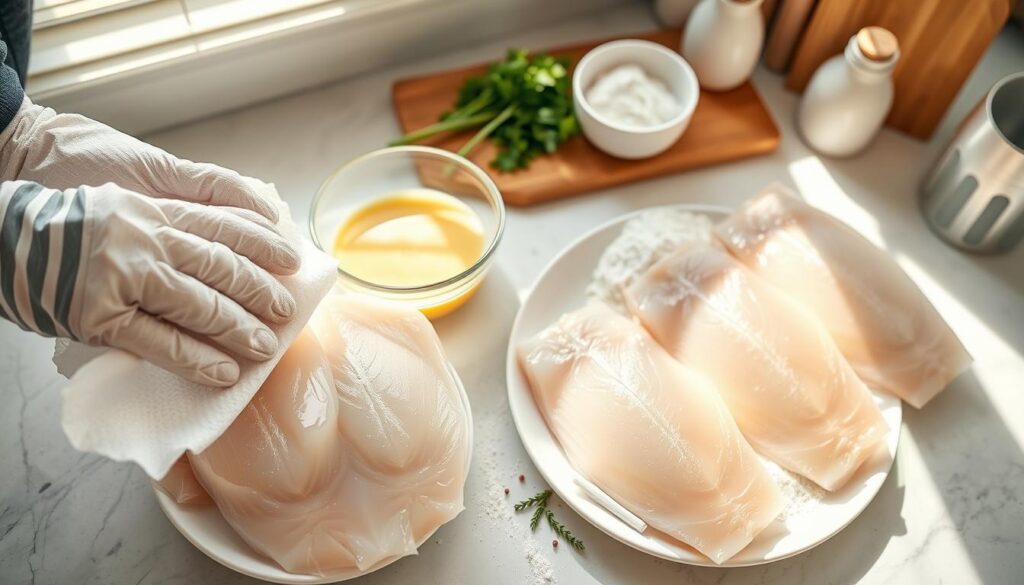
After drying, season the fish with salt and black pepper on both sides. This enhances the fish’s flavor, not just the batter. Seasoning inside makes a big difference.
Then, dust your fish with a cornstarch and flour mix. Sprinkle it over both sides and rub it in. This absorbs moisture and helps the batter stick. Shake off any extra powder for a light coat.
Cut your fish into pieces that are 3 to 4 inches long. This ensures even cooking and a better presentation. Keep the fish cold until you’re ready to fry. Cold fish leads to crispier results.
Have everything ready: your fish, beer batter, and hot oil. This setup helps you work efficiently and prevents mistakes.
- Pat fish fillets dry with paper towels
- Season all sides with salt and black pepper
- Dust with cornstarch and flour mixture
- Rub coating evenly across the surface
- Shake off any excess powder
- Cut into uniform 3-4 inch pieces
- Keep refrigerated until ready to cook
Step-by-Step Instructions for Frying Beer Battered Fish
Frying beer battered fish might seem hard at first. But, with these steps, you can make it just like a restaurant. The secret is to know how to fry and avoid common mistakes. You need to prepare well, keep the oil at the right temperature, and watch it closely while cooking.
Begin by filling a big pot or Dutch oven with enough oil to cover your fish. You’ll need about 2-3 inches of oil. Heat it over medium-high, using a thermometer to check the temperature. Getting the oil just right is key to crispy, golden fish.
Maintaining the Right Oil Temperature
The oil temperature is crucial for crispy, non-greasy fish. Aim for 350-365°F, with 365°F being best. If the oil is too cool, the batter soaks up too much oil and gets soggy. If it’s too hot, the outside burns before the inside is cooked.
Heat your oil to 365°F before adding the first batch. The temperature will drop a bit when you add fish. Adjust the heat to keep it at your target range. A good thermometer is essential for consistent results.
Here’s how to batter and fry:
- Dip a piece of fish in cold batter
- Let excess batter drip off
- Slowly add it to the hot oil with a spoon or tongs
- Fry in small batches—usually 2-3 pieces at a time
- Fry for 4-6 minutes, flipping once at the halfway point
- Check for golden brown color and crispiness
- Remove with a spoon and place on a wire rack over paper towels
Avoiding Common Deep Frying Mistakes
Many people make mistakes when frying beer battered fish. Here are the most common ones and how to avoid them:
- Overcrowding the pot: This causes the temperature to drop too much and steams instead of fries
- Flipping too frequently: Flip only once to keep the coating intact
- Wet fish before battering: Dry the fish well to help the batter stick
- Waiting too long after battering: Fry immediately to prevent the batter from getting soggy
- Ignoring oil temperature: Always use your thermometer to keep the oil at 350-365°F
- Adding wet fish directly to oil: This can cause splatter; use long-handled utensils
Draining is also key for good results. Use a slotted spoon or strainer to remove the fish from the oil. Then, place it on a wire rack over a baking sheet. This helps air circulate and prevents the bottom from getting soggy. Keep the fish warm in a 200°F oven while frying the rest, so everything stays crispy.
Making Homemade Tartar Sauce to Complement Your Fish
A great tartar sauce can make your homemade fish and chips unforgettable. While store-bought versions are fine, making your own gives you fresher flavors. Plus, you can customize it just how you like it. Making homemade tartar sauce only takes a few minutes.
Your homemade fish and chips deserve a sauce made with quality ingredients. Start with mayonnaise—use a good brand like Duke’s or Hellmann’s for the richest, creamiest base. Then, add layers of flavor that make people ask for your recipe.
Understanding each ingredient is key to creating the perfect sauce for your fried fish. Here’s what makes this sauce special:
- Dill pickles (minced fresh) provide the classic pickle flavor—better than relish for texture
- Dill pickle juice adds tanginess and brightness without needing vinegar
- Fresh lemon juice and zest bring citrusy notes that cut through richness
- Fresh dill gives tartar sauce its signature herb flavor
- Capers (optional) add salty, briny bursts of flavor
- Fresh garlic (minced) provides pungent depth—never use powder
- Worcestershire sauce brings savory umami notes
- Dijon mustard adds sharp, tangy background flavor
- Hot sauce (optional) creates subtle depth and warmth
- Sugar balances acidity and sweetness
Making your sauce takes just five minutes. Combine all your ingredients in a medium bowl and stir well. Taste and adjust seasonings as needed. Cover the bowl and refrigerate for at least thirty minutes before serving.
The flavors marry together beautifully after a few hours in the refrigerator, making your tartar sauce even better the next day.
Storage is simple. Keep your homemade tartar sauce in an airtight container in the refrigerator for up to one week. This makes it perfect for meal prep if you’re planning multiple homemade fish and chips dinners throughout the week.
| Ingredient | Amount | Purpose | Substitution Option |
|---|---|---|---|
| Mayonnaise | 1 cup | Creamy base | None recommended |
| Dill pickles (minced) | ⅓ cup | Classic pickle flavor | Dill pickle relish |
| Dill pickle juice | 2 tablespoons | Tangy brightness | Lemon juice |
| Fresh lemon juice | 1 tablespoon | Citrusy notes | Lime juice |
| Fresh lemon zest | ½ teaspoon | Citrus intensity | Omit if needed |
| Fresh dill (minced) | 2 tablespoons | Signature herb flavor | 1 tablespoon dried dill |
| Capers (minced) | 1 tablespoon | Briny complexity | Extra minced pickle |
| Fresh garlic (minced) | 1 clove | Pungent depth | ¼ teaspoon garlic powder |
| Worcestershire sauce | ½ teaspoon | Umami savory notes | Soy sauce |
| Dijon mustard | ½ teaspoon | Sharp tanginess | Yellow mustard |
| Hot sauce (optional) | ¼ teaspoon | Subtle heat and depth | Omit for mild sauce |
| Sugar | ¼ teaspoon | Balance flavors | Honey |
| Salt and black pepper | To taste | Season properly | Sea salt preferred |
Want to get creative? Try adding Old Bay seasoning for a Chesapeake Bay twist to your homemade fish and chips. You could swap some dill for fresh parsley, or use sweet pickle relish if you prefer a sweeter profile. These small changes let you make tartar sauce that matches your family’s taste perfectly every time.
Serving Suggestions for Your Crispy Beer Battered Fish
How you serve your beer battered fish can make a big difference. It can turn a simple meal into a memorable experience. Choose sides and sauces that complement your dish well.
Serve your fish hot right after frying. This keeps the coating crispy. Use warm plates or a heated platter to keep the food warm.
Classic Fish and Chips Presentation
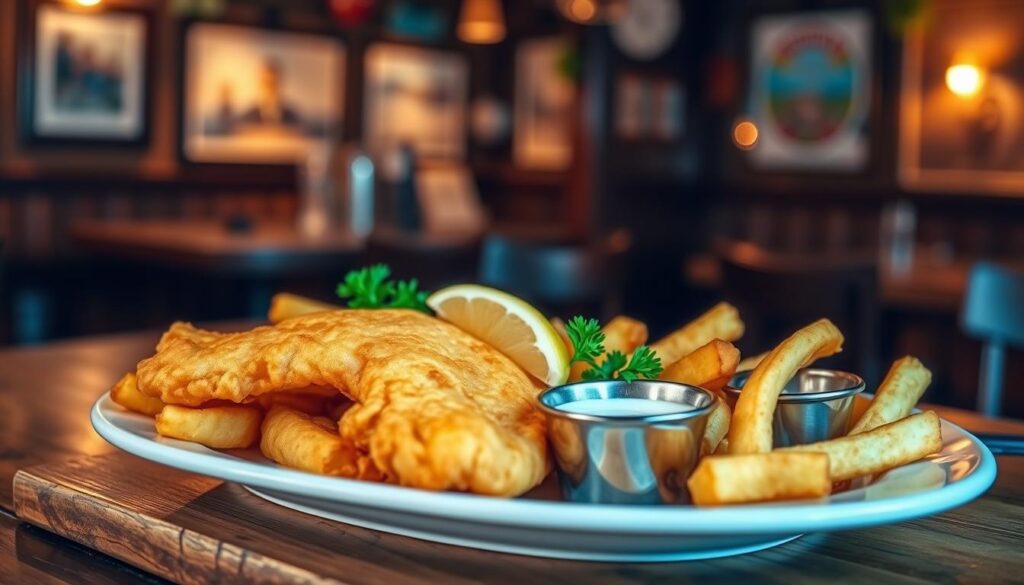
The traditional fish and chips is a favorite for many. It pairs fried fish with thick-cut fries. This simple combination is satisfying.
Place your fish with hot fries on plates or a platter. Offer tartar sauce in small ramekins for dipping. Add fresh lemon wedges and malt vinegar for extra flavor.
In places like Buffalo, the fish fry includes vinegar slaw and potato salad. These sides add a tangy and creamy element. Serve with tartar sauce, lemon, and warm rye bread for a full meal.
In England, mushy peas are a common side with fish and chips. They offer a soft contrast to the crispy fish. This side adds comfort to the dish.
Creative Side Dishes and Accompaniments
You can make your beer battered fish meal your own. Choose sides and sauces that fit your taste. This makes the dish perfect for any occasion.
| Side Dish or Sauce | Flavor Profile | Best Paired With |
|---|---|---|
| Crisp Vinegar Slaw | Refreshing and Tangy | All Traditional Presentations |
| Parmesan Truffle Fries | Rich and Savory | Upscale Pub-Style Meals |
| Hush Puppies | Sweet and Cornmeal-Based | Southern-Inspired Dinners |
| Cocktail Sauce | Tangy with Horseradish Heat | Seafood-Focused Meals |
| Creole Remoulade | Spiced with Paprika and Cajun Seasonings | Louisiana-Style Presentations |
| Spicy Jalapeño Hot Sauce | Fiery and Fresh | Heat-Loving Diners |
| Green Salad | Light and Crisp | Lighter, Healthier Meals |
Try serving your fish in new ways, like fish tacos or sandwiches. These formats offer a fresh twist on the classic dish.
Your choice of sauce can really define the meal. Consider offering options like cocktail sauce, Creole remoulade, or spicy sriracha mayo.
Lighter sides can balance out the richness of the fish. Try cucumber salad, pickled vegetables, or simple greens. These choices make the meal complete and memorable.
Choosing the right drink can enhance your meal. Beer, white wines like Sauvignon Blanc, or hard cider are great choices. For non-alcoholic options, lemonade or iced tea can provide a refreshing contrast.
Pro Tips for Restaurant-Quality Results at Home
To get restaurant-quality beer battered fish, focus on the small details. The techniques you use are as important as your ingredients. By mastering specific methods and controlling temperature, you can achieve crispy, golden fish like your favorite seafood restaurant.
Keeping everything cold is key. Your fish should stay refrigerated until you coat it. Your beer should be straight from the fridge. Chill your mixing bowl in the freezer for 15 minutes before mixing your batter. This cold environment helps create the crispiest coating.
Controlling your cooking oil’s temperature is crucial. Keep it between 350°F and 365°F. Use a thermometer to monitor this constantly. Fry in small batches to keep the temperature steady.
Batter Preparation and Resting
Your batter technique is crucial. Mix ingredients gently and only until combined. Overmixing makes the coating tough. Let your batter rest for 10-15 minutes to hydrate the flour and activate the baking powder.
Keep your batter thin, like heavy cream or pancake batter. A thin batter coats your fish delicately and creates crispiness.
Fish Preparation and Frying Technique
Pat your fish fillets dry with paper towels before battering. Any moisture prevents proper batter adhesion. Cut your fish into uniform pieces for even cooking.
Lower your fish into hot oil gently and slowly. Flip it only once to prevent batter breakage. Let the coating set undisturbed.
| Frying Step | What to Do | Why It Matters |
|---|---|---|
| Oil Temperature | Maintain 350°F–365°F consistently | Ensures proper cooking and golden, crispy coating |
| Batch Size | Fry 2–3 pieces at a time | Prevents oil temperature drops and overcrowding |
| Fish Placement | Lower gently into hot oil | Minimizes splashing and batter damage |
| During Cooking | Flip only once, don’t move the fish | Allows coating to set and prevents breakage |
| Draining | Use wire racks instead of paper towels | Prevents steam from making coating soggy |
Draining and Serving Your Fish
Drain your beer battered fish on a wire rack or mesh rack, not paper towels. Paper towels trap steam, making the coating soggy. Wire racks allow air to circulate, keeping the coating crispy.
Keep finished batches warm in a low oven set to 200°F. Serve your beer batter fish immediately for the best texture and taste. The longer it sits, the less crispy it becomes.
Ingredient Variations and Substitutions
- Replace some all-purpose flour with white rice flour for even lighter, crispier texture
- Substitute part of the beer with vodka for extra crispiness (alcohol evaporates faster than water)
- Use club soda or sparkling water as a non-alcoholic alternative to beer
- Add cornstarch to your dry ingredients for additional crunch and crispiness
Troubleshooting Common Problems
If your batter slides off, your fish wasn’t dry enough or you skipped dredging it in flour and cornstarch. Wet fish won’t hold batter properly. If your coating turns soggy, your oil temperature was too low or you didn’t drain it properly. If your coating is too dark but your fish is undercooked, your oil was too hot. Lower the temperature and increase your cooking time slightly. If your coating tastes greasy, your oil temperature was too low or you overcrowded your pan.
“The difference between mediocre and excellent beer battered fish comes down to attention to detail and respecting the science of frying.”
When making beer batter fish for a crowd, you can double your batter recipe. Discard any leftover batter after use. Batter loses its carbonation and freshness quickly, affecting your final results the next time you fry.
Storing and Reheating Leftover Beer Battered Fish
Beer battered fish is best when it’s fresh and hot. Fried foods can be hard to reheat without losing their crispiness. But, with the right storage and reheating, your leftovers can still be tasty.
First, let your fish cool down to room temperature before storing it. Never leave fried fish out for more than two hours for safety. This simple step helps a lot.
Best Methods to Keep the Coating Crispy
To keep the coating crispy, stop moisture from building up. Place your cooled fish between parchment paper or paper towels in a container. This keeps the fish from sticking and absorbs moisture. Your fish will stay fresh for two to three days this way.
When reheating, choose the best method:
- Oven method – Preheat to 350-375°F. Place fish on a wire rack over a baking sheet. Bake for 12-15 minutes until hot.
- Air fryer method – Preheat to 320°F. Cook fish in the basket without crowding. Air fry for 6-8 minutes, flipping once.
- Stovetop method – Heat a skillet over medium to medium-low heat. Cook for 2-3 minutes per side until crispy and hot.
Don’t use your microwave to reheat beer battered fish. Microwaves make the coating soft and soggy. It’s a last resort.
Freezer Storage Guidelines
Beer battered fish freezes well for up to a month. It’s great for meal prep or batch cooking. Let your fish cool to room temperature first.
Follow these steps for freezing:
- Arrange pieces in a single layer on a parchment-lined baking sheet
- Freeze until solid for about two hours
- Transfer frozen pieces to a freezer-safe airtight container or heavy-duty freezer bag
- Layer parchment paper between pieces to prevent them from sticking together
When reheating frozen beer battered fish, the oven is best. Preheat to 375°F and bake for 18-22 minutes. Your air fryer also works great: cook at 350°F for 10-12 minutes, flipping once.
Remember, discard any leftover uncooked batter after frying. Never store batter for later. It loses carbonation and poses food safety risks.
Conclusion
Making beer battered fish at home is easier than you think. You now have all the knowledge and techniques to make delicious beer battered fish. The more you practice, the better you’ll get.
The small details are key when making this dish. Keep your ingredients cold and don’t overmix the batter. Dry and dredge your fish well. Fry at the right temperature and drain on a wire rack for extra crispiness.
Beer battered fish is great for many occasions. Serve it for family dinners, Lenten fish fries, or game day gatherings. It’s also perfect for upscale dinner parties. Making it at home saves money, especially when serving a crowd.
Make the recipe your own by adding your favorite sides, sauces, and drinks. Enjoy the crispy, delicious fish you’re about to make. You have everything you need to bring restaurant-quality results to your dinner table.