
How to Make Chicken Gravy at Home in Minutes
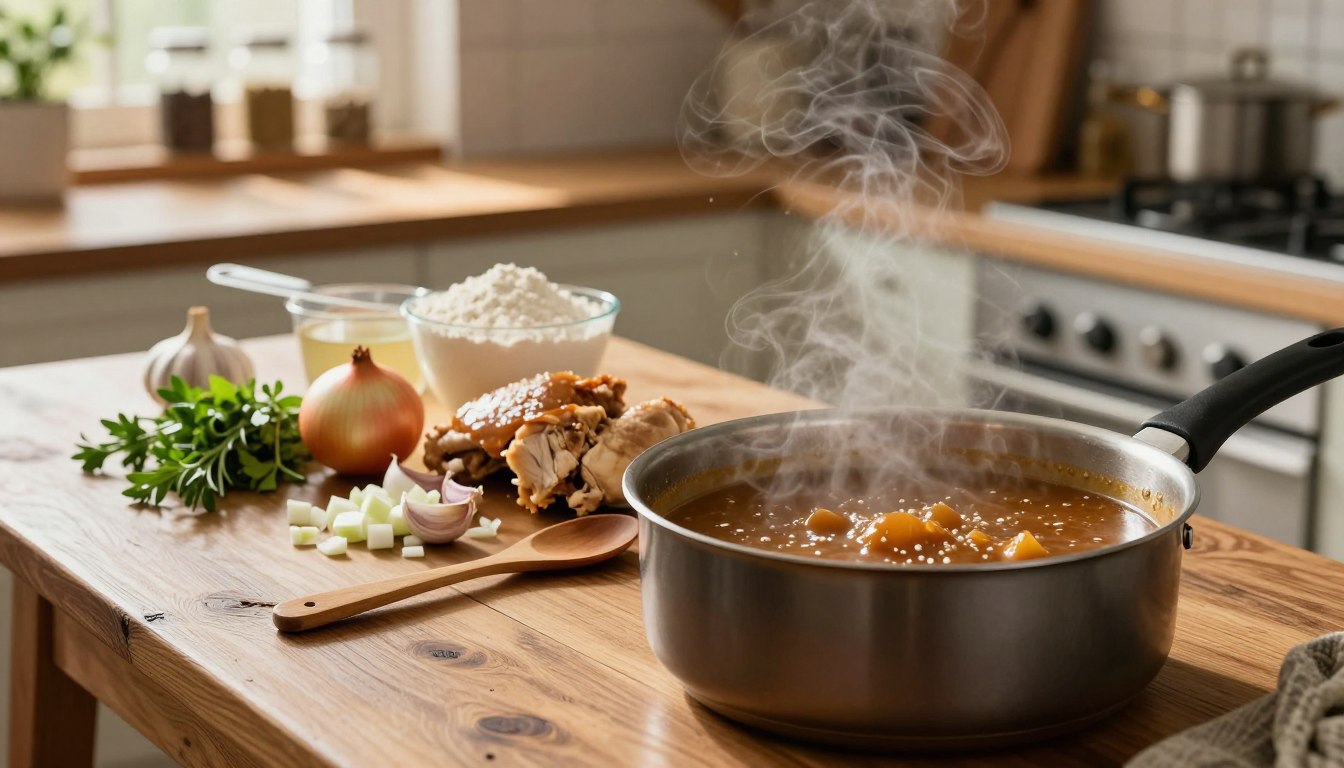
Rich, savory gravy is comforting, especially with chicken. It brings back memories of family dinners. Or, it adds warmth to simple meals. Making chicken gravy at home can make your dishes better, whether for holidays or just a cozy dinner.
Homemade chicken gravy is simple to make. With just a few ingredients and some time, you can create delicious gravy. It’s perfect for your favorite dishes.
Let’s dive into the world of homemade chicken gravy. We’ll learn how to make it quickly and see how it makes any meal better. Your taste buds will love it!
- Homemade chicken gravy enhances the flavor of meals.
- It’s easy and quick to make chicken gravy from scratch.
- Perfect for family dinners and special occasions.
- Understanding key ingredients can elevate your gravy.
- You can make chicken gravy even without drippings.
Table of Contents
Why Homemade Chicken Gravy is Superior
Making your own chicken gravy at home is a game-changer. It tastes much better than store-bought options. Store-bought gravies often have additives that ruin the flavor. But, with homemade, you pick every ingredient.
At home, you can make the gravy just how you like it. You can add more seasonings to make it richer and more savory. This way, you can create the perfect gravy for your meals, like roast chicken or chicken pot pie.
Forget about packet gravies with fake flavors. Making your own chicken gravy is simple and rewarding. With a few fresh ingredients and some effort, you can make a gravy that makes your meals stand out. It will impress your family and friends.
Key Ingredients for Chicken Gravy
Making a rich chicken gravy starts with knowing the key ingredients. Each part is important for the final sauce.
Butter is the base of your gravy. It mixes with flour to create a roux, thickening the sauce. Flour adds thickness and texture. Chicken broth brings out the flavor, making it savory and tasty.
Seasonings can also make your gravy better. Salt, pepper, and herbs like thyme or rosemary are common. They let you adjust the flavor to your taste, using what you have at home.
Here’s a quick overview of the essential ingredients for gravy:
| Ingredient | Function |
|---|---|
| Butter | Forms the roux for thickening |
| Flour | Thickens the gravy |
| Chicken Broth | Adds flavor |
| Salt | Enhances taste |
| Pepper | Adds spice |
| Dried Herbs | Boosts flavor complexity |
Choosing the right ingredients for your gravy is key. It makes a delicious chicken gravy that can make any meal better.
How to Make Chicken Gravy Without Drippings
Making chicken gravy doesn’t need drippings. You can make a rich, tasty sauce with just four ingredients: butter, flour, chicken broth, and seasonings. This method is quick and easy, perfect for any meal.
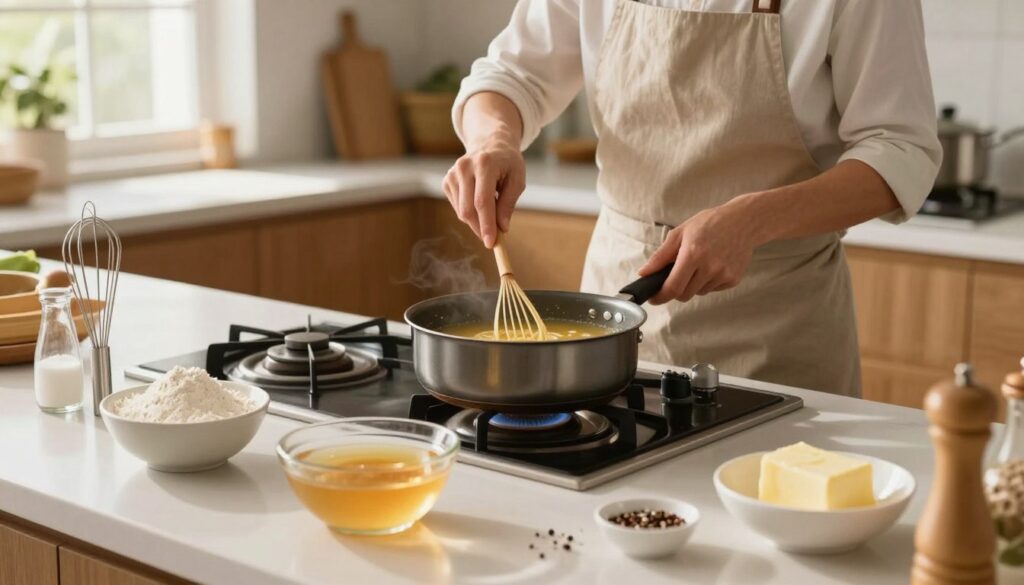
Begin by melting butter in a saucepan over medium heat. Then, mix in an equal amount of flour to make a roux. Cook for a minute, avoiding browning. Next, add chicken broth slowly while whisking to avoid lumps. Season with salt, pepper, and herbs for extra flavor.
This method is great for busy nights. You don’t need leftover juices from roasted chicken. It’s a simple way to make your dinners better without much effort.
Step-by-Step Guide to Making Chicken Gravy
Making chicken gravy is easy with a clear guide. A step-by-step chicken gravy guide helps beginners get great results. Begin by making a roux, mixing equal parts butter and flour in a pan over medium heat. Stir constantly to avoid burning, aiming for a light golden color.
When your roux is ready, slowly add chicken broth while whisking hard. This step is key for a smooth gravy. Add the broth bit by bit, letting it mix well before adding more. If it’s too thin, cook it longer, stirring often.
For a richer taste, add seasonings like salt, pepper, and garlic powder. This makes your gravy even better. Following these steps will help you make a delicious gravy. Serve it over mashed potatoes, rice, or with roasted chicken for a tasty meal.
How to Make Chicken Gravy Using Drippings
Making the best chicken gravy with drippings adds a special touch to your meals. Start by collecting the drippings from the roasting pan after your chicken is cooked. It’s important to separate the fat from the juices for the right taste and texture.
Let the drippings settle in a container. The fat will rise to the top, making it easy to skim off. Use about 1/4 cup of this fat as the base for your gravy. In a saucepan, mix the fat with an equal amount of flour to make a roux. Whisk constantly to prevent lumps and get a golden color.
Gradually add your saved chicken juices and any extra broth to get the right consistency. Season with salt, pepper, and herbs to boost the flavor. You’ll end up with a thick, savory gravy that goes perfectly with your chicken.
Common Mistakes to Avoid
Many people struggle with making chicken gravy. Knowing the common mistakes can help you make a smooth, tasty gravy. One big mistake is not cooking the roux long enough. If the flour isn’t cooked well, the gravy might taste raw.
Another mistake is adding cold liquid to hot fat. This can cause lumps, ruining the gravy’s smoothness. Make sure your liquid is room temperature to prevent this. Constantly whisking as you mix is key. It helps avoid lumps and makes the gravy silky.
Don’t over-season your gravy. It’s easy to add too much flavor, but remember, the drippings or broth already have seasoning. Taste as you go and adjust slowly to get the flavor just right.
By avoiding these common mistakes, you’ll become more confident in your cooking. With practice, you’ll make gravy that’s always a hit.
Additional Flavor Enhancements
To make your chicken gravy even better, try adding some easy flavor enhancements for gravy. Fresh herbs, minced garlic, or a bit of cream can really boost the taste. Fresh thyme or rosemary give a nice smell, while garlic adds a savory flavor.
Adding sautéed mushrooms or onions can give your gravy a fancy touch. These ingredients add richness and texture, making your gravy a perfect match for many dishes. For a special touch, a little white wine can add elegance.
Playing with these ingredients lets you make your chicken gravy your own. Gravy is very versatile, so feel free to get creative. Mix and match these flavor boosters to suit your taste.
| Flavor Enhancements | Flavor Profile | Best Used With |
|---|---|---|
| Fresh Herbs | Aromatic and fresh | Roasted chicken, mashed potatoes |
| Garlic | Rich and savory | Pasta dishes, savory breads |
| Cream | Rich and luscious | Steak, vegetable dishes |
| White Wine | Slightly tangy and sophisticated | Poultry, seafood |
| Sautéed Mushrooms | Earthy and meaty | Beef dishes, risottos |
| Sautéed Onions | Sweet and caramelized | Sandwiches, burgers |

Storage Tips for Leftover Gravy
Properly storing chicken gravy keeps it fresh and flavorful for later. First, let the gravy cool down to room temperature. Then, move it to the fridge. This step is key to stopping bacteria growth, ensuring your food stays safe.
Choose airtight containers for your gravy. These containers keep the gravy’s quality high and prevent it from picking up fridge odors. Here are some tips for fridge storage:
- Store gravy in a clean, airtight container.
- Label the container with the date it was made.
- Consume refrigerated gravy within 3 to 4 days for the best taste.
If you have leftover gravy, freezing is a great option. Freezing extends its life and makes reheating easy. Here’s how to freeze it right:
- Divide the gravy into smaller containers. This makes thawing and reheating easier.
- Leave some space at the top of each container. Freezing causes the gravy to expand.
- Mark your containers with the date and what’s inside for easy identification later.
Frozen chicken gravy can last up to 4 to 6 months. To use, thaw it in the fridge overnight. Then, reheat it on the stovetop over low heat, stirring often. These tips help you save food and keep your gravy tasty for your next meal.
| Storage Method | Duration | Best Practices |
|---|---|---|
| Refrigerator | 3-4 days | Airtight containers; cool before storing |
| Freezer | 4-6 months | Portion out; leave space for expansion |
Serving Suggestions for Chicken Gravy
Chicken gravy is versatile and can make your meals better. It pairs well with many foods, adding a rich flavor. Try it with mashed potatoes for a cozy meal. The gravy’s creaminess matches the potatoes’ fluffiness perfectly.
Rice is another great choice. The gravy soaks into the rice, making each bite more flavorful. For a lighter option, serve it over steamed veggies. This lets the natural flavors of the veggies shine while adding a savory touch.
Biscuits are also a hit with chicken gravy. It turns into a classic Southern dish that everyone enjoys. For a heartier meal, drizzle it over roasted or grilled meats like beef or pork. The gravy blends well with the meat’s juices, making it incredibly tender.
Breakfast lovers can also enjoy chicken gravy. It’s great on scrambled eggs or breakfast sandwiches. It adds a special touch, making your morning meal even better. Exploring different ways to serve chicken gravy can lead to new favorites and delicious flavors.
Conclusion
Making homemade chicken gravy is a rewarding task that can make any meal better. You can use drippings from a roasted chicken or make a quick version without them. This guide shows how easy it is to make a comforting sauce that feels like home.
The secret to great chicken gravy is in the ingredients and technique. As you try different recipes, remember to taste and adjust the seasonings. Adding herbs or spices can give it a special touch. Being creative in the kitchen will lead to amazing results.
We invite you to try making chicken gravy at home. Your feedback and experiences are important to us. Share your favorite variations or tips! Making homemade gravy is a great way to impress your loved ones.